The war that lasted less than an hour
In August 1896 Britain went to war with the island of Zanzibar. It was all over before 10am, and it is still listed as the shortest war on record. For the people inside the palace, it was anything but a curiosity.
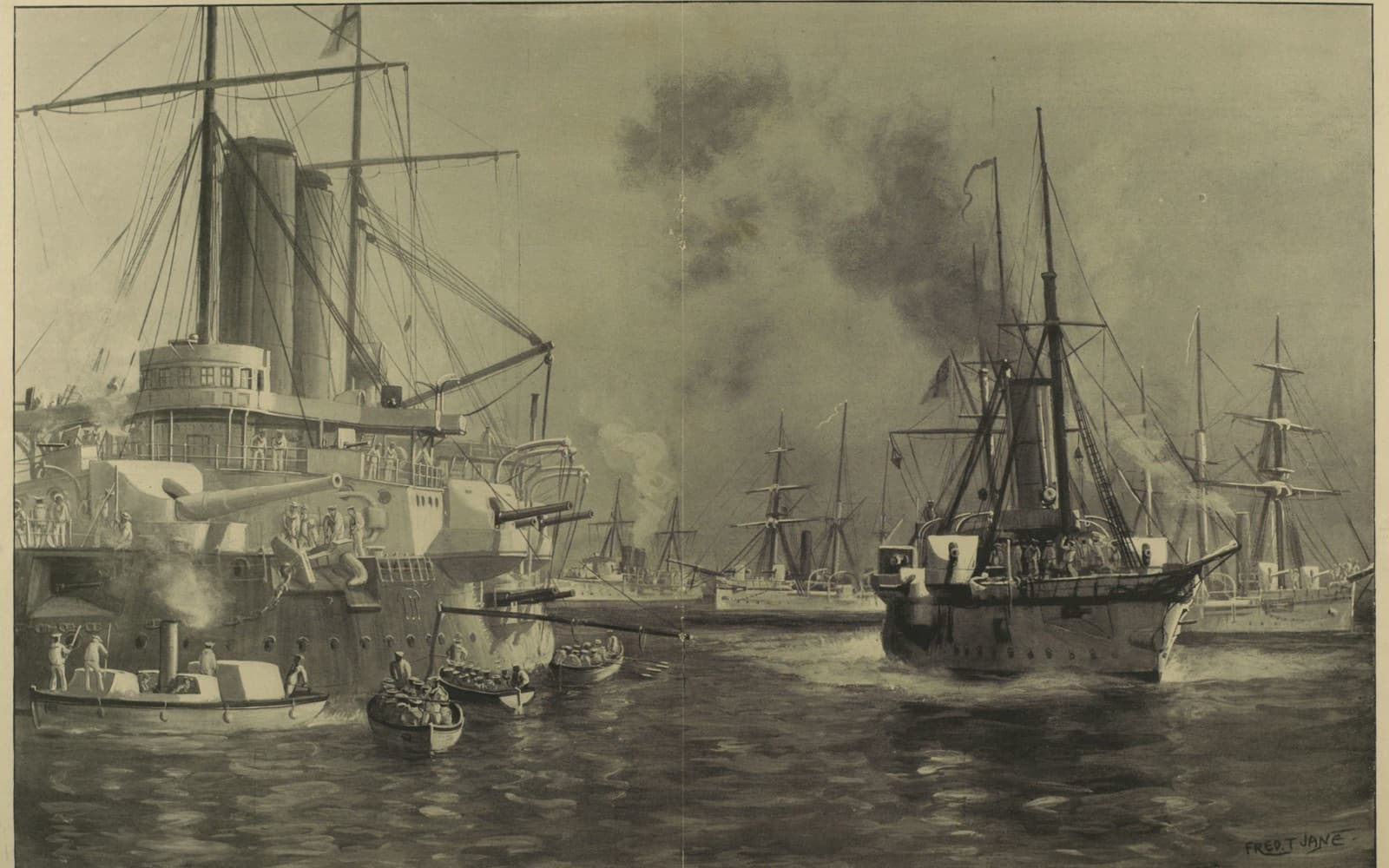
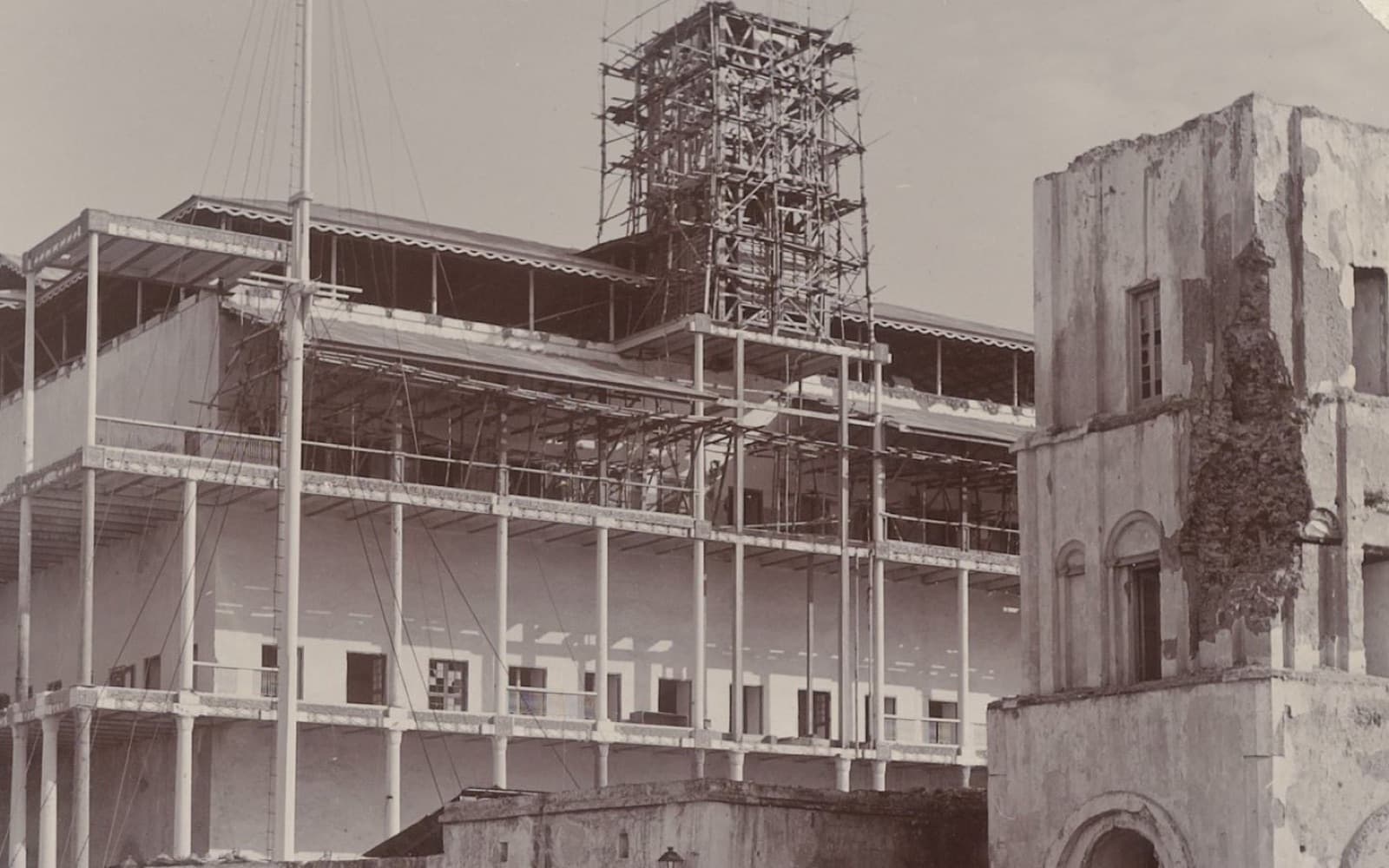
At nine o'clock on the morning of 27 August 1896, a deadline ran out in the harbour of Zanzibar. A few minutes later, three British warships opened fire on the sultan's palace at almost point-blank range. Before ten o'clock it was over. It is still listed by Guinness World Records as the shortest war on record.
An island under British control
Zanzibar is an island off the coast of East Africa, in what is now Tanzania. In the 19th century it was ruled by sultans and was one of the busiest trading ports on the Indian Ocean, including, for much of the century, in enslaved people.
By the 1890s it was also part of Britain's empire in all but name. In 1890 Britain and Germany agreed to carve up their interests in East Africa, and Zanzibar became a British protectorate. That June, Sultan Ali bin Said signed an agreement with the British consul-general guaranteeing his right to name his own successor, but only "subject to the approval of Her Majesty's Government". In practice, Britain decided who sat on the throne.
A death, and a seizure
On 25 August 1896, Sultan Hamad bin Thuwaini died suddenly around midday. Rumours spread that he had been poisoned, though nothing was ever proved.
Within hours, his cousin Khalid bin Barghash, the son of an earlier sultan, had moved into the palace with armed followers and declared himself sultan. He had tried the same thing once before, in 1893, and had been forced out. This time he gathered a much bigger force, which British accounts put at around 2,000 to 3,000 men, along with a number of cannon, mostly old, two Maxim machine guns and the sultan's armed yacht, the Glasgow.
Britain wanted a different candidate, Hamoud bin Mohammed. The British consul, Basil Cave, telegraphed London to ask whether he could use force. The prime minister, Lord Salisbury, said yes.
The ultimatum
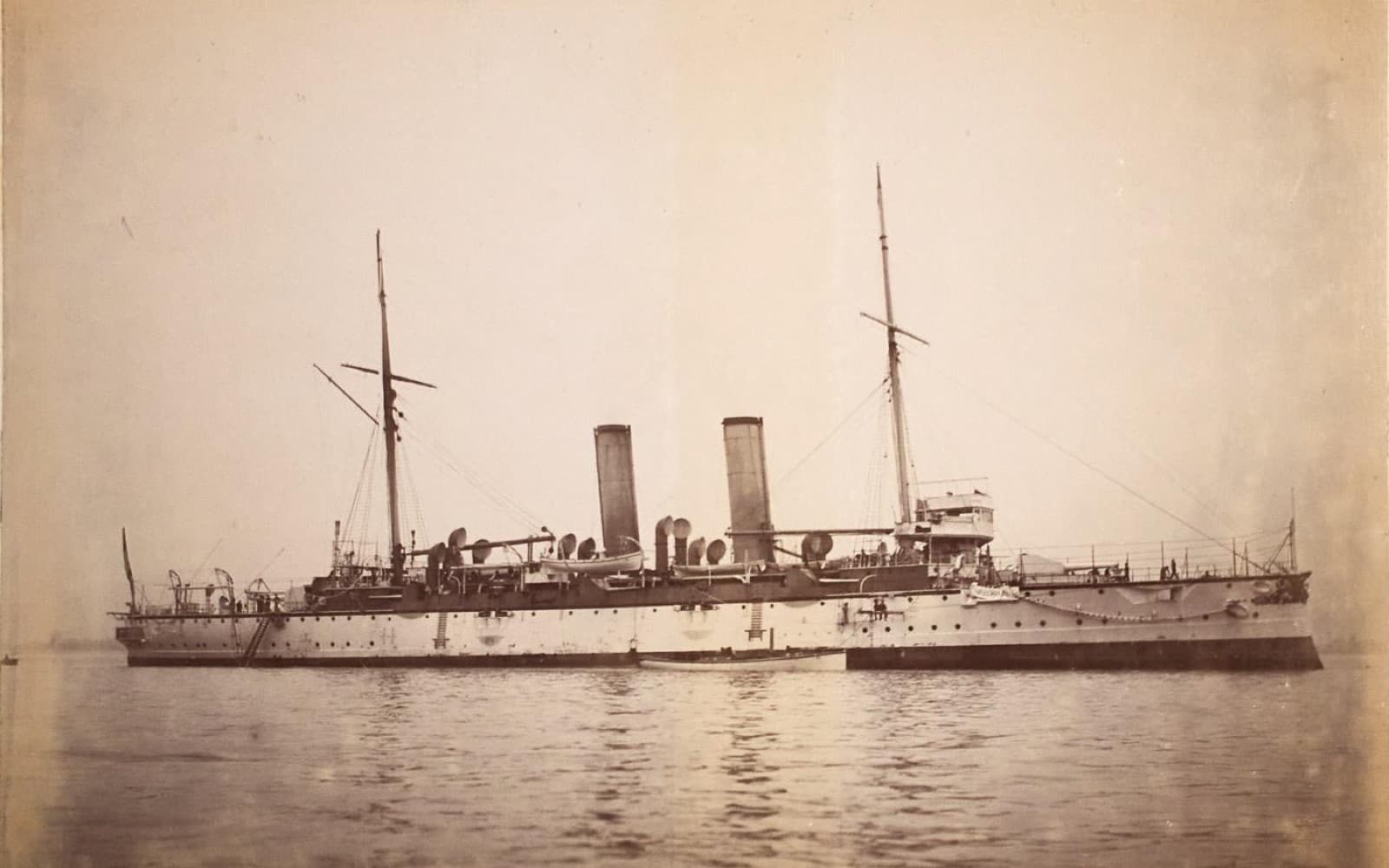
By 26 August five Royal Navy ships were anchored off the palace, including the flagship HMS St George, under Rear-Admiral Harry Rawson. Early on the morning of the 27th, Rawson sent his ultimatum. Khalid had until nine o'clock to haul down his flag, have his men lay down their arms, leave the palace and give himself up.
Khalid refused. According to one account, his reply on the morning of the 27th was that he had no intention of hauling down his flag and did not believe the British would open fire. The night before had been eerily quiet. The American consul, Richard Mohun, is quoted as saying: "Usually drums were beating or babies cried but that night there was absolutely not a sound."
Thirty-seven minutes, or forty-five
At five minutes to nine, Rawson signalled his ships to prepare for action. At nine, the deadline passed. Moments later the gunboat Thrush opened fire, followed by the Racoon and the Sparrow.
Within half an hour, the palace was in flames. The sultan's yacht Glasgow fired on the British ships and was sunk by the St George. Nine of her crew were killed or drowned, and her masts stuck out of the harbour until the wreck was broken up in 1912.
Then the red flag above the palace came down, and the guns stopped. Exactly when depends on whom you ask. A Zanzibar official writing in 1905 said it was 37 minutes after the first shot. The ships' own logs reportedly disagree with each other, and Guinness gives 9am to 9:45am. The figure most often quoted is 38 minutes.
The cost
For the British, the cost was one sailor on the Thrush seriously wounded (accounts differ on whether he survived) and a few others slightly hurt. For Zanzibar, it was around 500 people killed or wounded. Many were Khalid's fighters, among them enslaved men who had been made to crew the palace guns. Civilians in the streets nearby were hurt too.
A missionary, the Rev. J. P. Farler, who went into the palace afterwards, wrote: "It was an awful sight; dead bodies lying everywhere, and such ruin and destruction!"
The sultan who got away
Khalid did not stay to surrender. He slipped out of the palace and ran to the German consulate, where the Germans refused to hand him over. On 2 October a German warship anchored off the consulate and took him off by boat, straight from the consulate's grounds, to Dar es Salaam in German East Africa. He never set foot on Zanzibar's soil again.
Back on the day of the bombardment, Hamoud bin Mohammed had been proclaimed sultan. Khalid's supporters were made to pay heavy fines, and those who could not pay were forced to leave. Khalid lived on in German territory until British forces captured him during the First World War, in 1916 or 1917 (accounts differ). He was exiled to St Helena and the Seychelles, and was later allowed to settle in Mombasa, where he died in 1927.
A curiosity, and a lesson
The following year, the new sultan abolished the legal status of slavery in Zanzibar under British pressure. It is sometimes said that the war was fought to end slavery, but it was really a fight over who would be sultan, and who would decide.
When Parliament met in January 1897, the Liberal MP Joseph Pease pressed the government to abolish slavery in Zanzibar. Deposing one sultan and putting another in his place, he pointed out, "showed that we had absolute control over the islands", so there was no excuse for delay.
The shortest war on record makes a good pub quiz answer. It was also, for a few dozen minutes on an August morning, a very clear demonstration of what an empire could do.
Odd, and entirely British.
More History →