The war Britain and America nearly fought over a pig
In 1859 an American farmer shot a pig on a small island off the Pacific coast. Within weeks, British warships and American troops were facing each other, and the two sides then shared the island for twelve years.
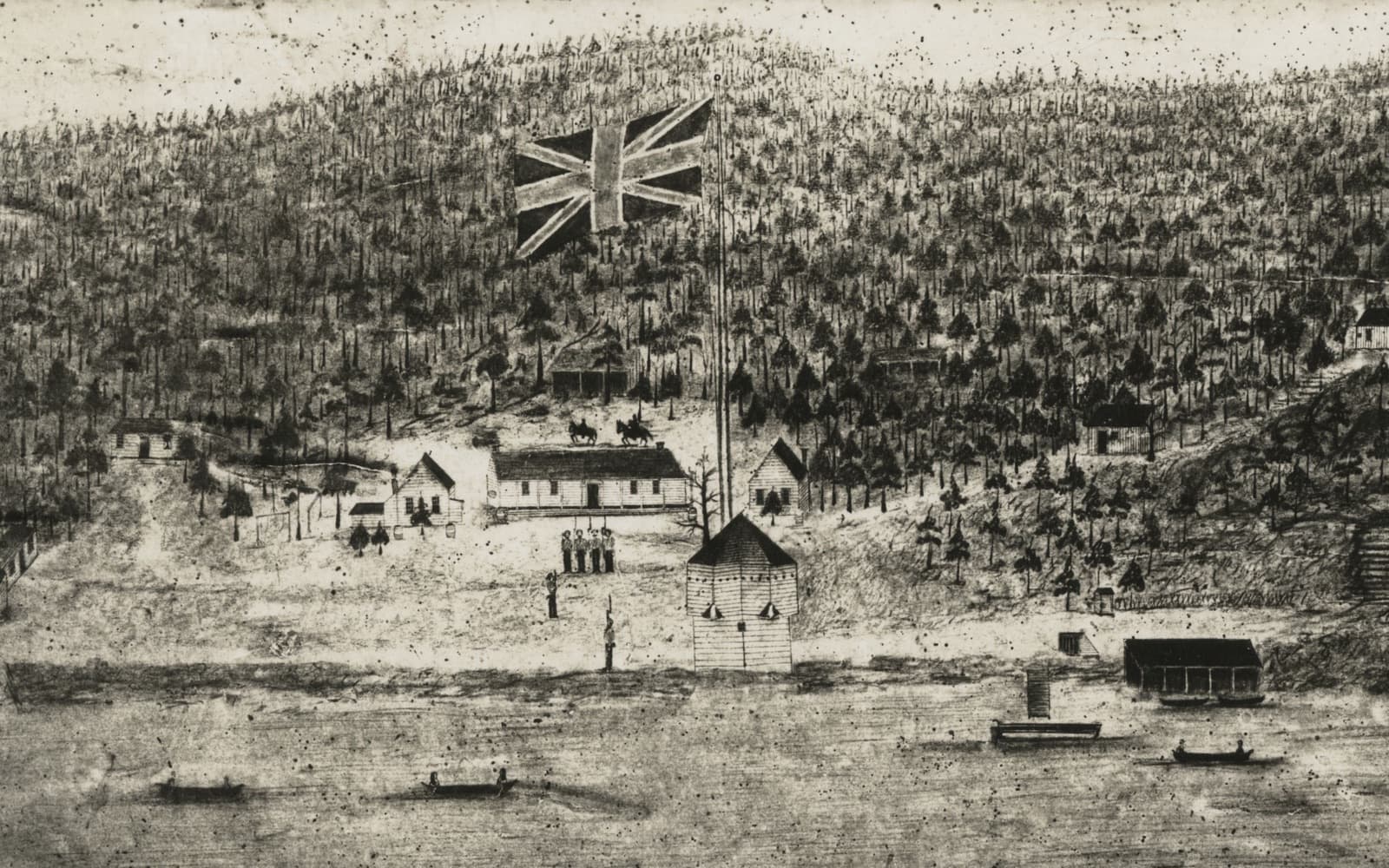
On 15 June 1859, an American called Lyman Cutlar found a pig rooting about in his potato patch on San Juan Island, in the waters between Vancouver Island and the mainland of what is now Washington State. It was not the first time. Cutlar shot it dead.
The pig belonged to the Hudson's Bay Company, the great British fur-trading business. Within about six weeks, American soldiers had landed on the island and British warships had sailed in to face them. Two great powers were on the edge of war over a pig.
An island nobody had thought about
The trouble went back to 1846, when Britain and the United States signed the Oregon Treaty, which drew the border between their territories along the 49th parallel, the line that still forms much of the border between Canada and the US west of the Great Lakes.
When the line reached the sea, it was meant to run "through the middle of the said channel" that separates the mainland from Vancouver Island. But there were two main channels: Haro Strait to the west and Rosario Strait to the east, with the San Juan Islands in between. Britain said the border ran down Rosario Strait, leaving the islands British. The Americans said Haro Strait.
Both sides moved in. In December 1853 the Hudson's Bay Company set up Belle Vue Sheep Farm on San Juan Island, managed by Charles Griffin. Washington Territory, created that year, also claimed the islands. In 1855 the Whatcom County sheriff even landed at night and auctioned off some of the company's sheep on the beach. By the spring of 1859, around 18 American settlers had staked out land on ground the company used for grazing. To the British, they were trespassers.
A pig and a potato patch
Cutlar was one of those settlers, a former gold miner who had arrived that April. According to HistoryLink, the pig was a Berkshire boar belonging to Griffin, who valued it at $100. Cutlar said it was worth less than $10 and offered to replace it. Accounts of what followed are disputed, but Cutlar later said British officials threatened to arrest him and take him to Victoria for trial. The National Park Service says the British also threatened to evict all Americans from the island.
The Americans complained to the US Army. The local commander, Brigadier General William Harney, disliked the British and needed little persuading.
Soldiers, warships and a lot of guns
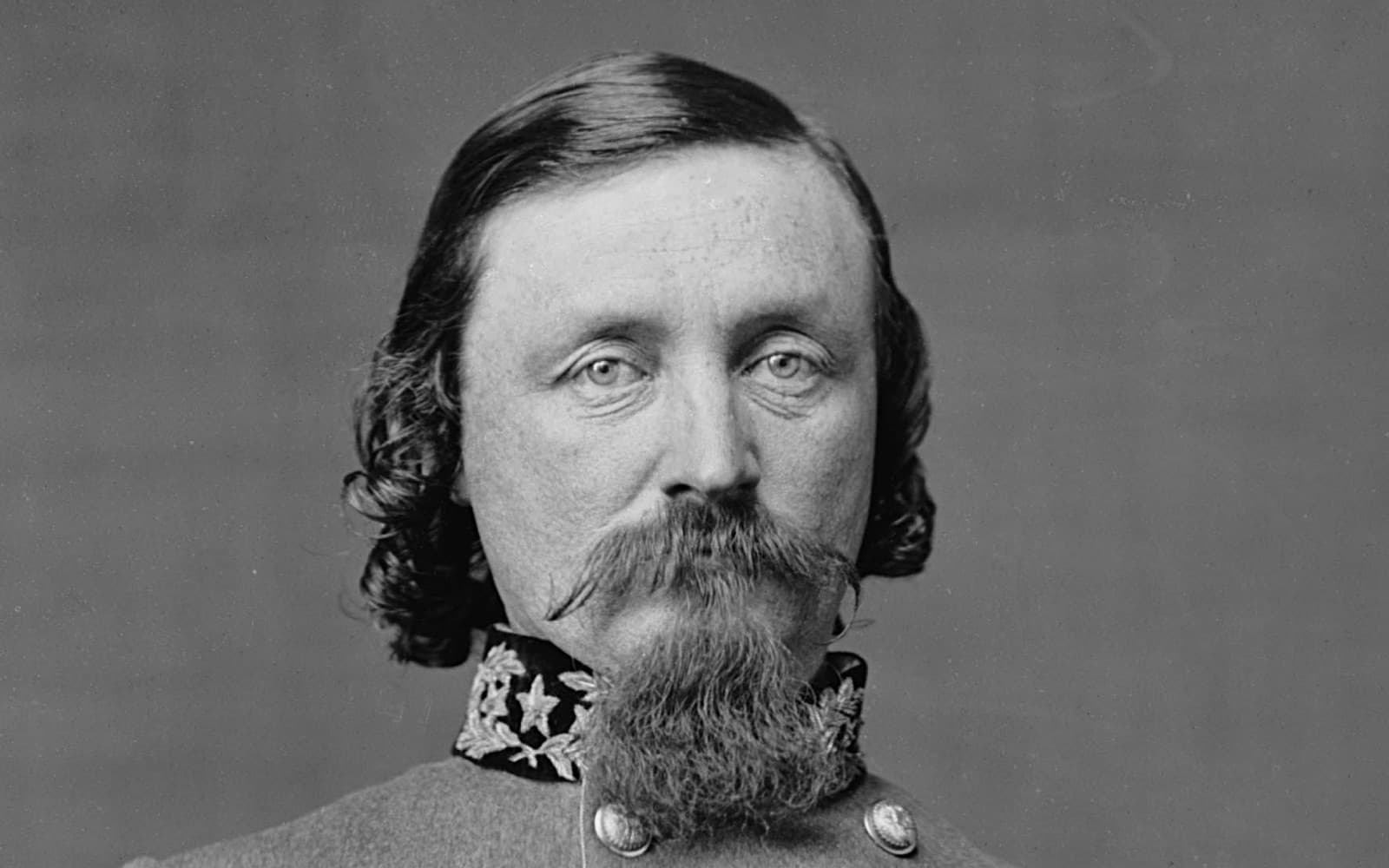
Harney ordered Captain George Pickett to take his infantry company to the island. Pickett's 64 men landed on 26 or 27 July 1859 (sources differ) and camped near the company's wharf. Pickett put up a notice declaring the island United States territory.
The governor of the British colony of Vancouver Island, James Douglas, sent Captain Geoffrey Phipps Hornby with the 31-gun frigate HMS Tribune, soon joined by HMS Satellite and HMS Plumper. On 3 August Hornby and the other captains met Pickett and told him to leave. Pickett refused and said he would resist any British landing.
By the end of August the Americans had 461 men and 14 field guns dug in on the island, and the British warships carried 52 guns between them, according to the National Park Service. Douglas wanted Royal Marines put ashore. Hornby, convinced Pickett was not bluffing, held off until his commander arrived.
The admiral who said no
That commander was Rear Admiral Robert Lambert Baynes, head of the Royal Navy's Pacific Station, who returned to Vancouver Island on 5 August. He backed Hornby, cancelled the order to land the marines and told his officers to avoid any clash with the American army.
According to the National Park Service, Baynes reportedly told Douglas he would not "involve two great nations in a war over a squabble about a pig." The park service does not name a source document, so these may not be his exact words. He was knighted the following year.
An alarmed President James Buchanan sent the head of the US Army, General Winfield Scott, then 73, who reached the area in October. Scott proposed that each side keep one company of about 100 men on the island. Douglas would not agree without London's approval, but the Americans cut their force to a single company and the British kept just one warship nearby. Britain later accepted a joint military occupation. Pickett's company was replaced, though he returned the following April, and Harney was later removed from command.
Twelve years of sharing
On 21 March 1860 (some park service pages say 23 March) Royal Marines landed at Garrison Bay on the north-west of the island and built what became known as English Camp. The Americans stayed at their camp at the southern end, about 15 miles away.
What followed was a remarkably friendly occupation. Officers from both sides went to church together, shared meals and drinks, and visited each other's camps for celebrations.
Then, in the Treaty of Washington of 1871, the two countries agreed to let a neutral judge decide. They chose Kaiser Wilhelm I of Germany, who could pick only one of the two channels. He handed the evidence to three experts, and on 21 October 1872 he ruled for the United States: the border would run down Haro Strait. The Royal Marines left English Camp in November 1872. The last American troops left in July 1874.
Was the pig really the cause?
The pig was the spark, not the reason. The real dispute over the islands had been simmering for more than a decade. When the settlers asked Harney for troops in July 1859, their petition did not even mention the pig. It asked for protection from raids by "Northern Indians".
But one part of the legend is true. In the whole stand-off, not a single soldier was killed by the other side. The only casualty was the pig.
The flag that still flies
Both camps are now part of San Juan Island National Historical Park. At English Camp, the Union flag still flies over American soil, from an 80-foot flagpole given to the park by the people of the United Kingdom in 1998. Each summer the park has held an Encampment, where re-enactors in period uniforms raise the colours and mark the war that never quite happened.
Odd, and entirely British.
More History →