The day a wave of beer swept through London
In 1814 a giant vat burst at a London brewery and more than a million pints of beer poured into the slums around it. Eight people died, and no one was held to blame.
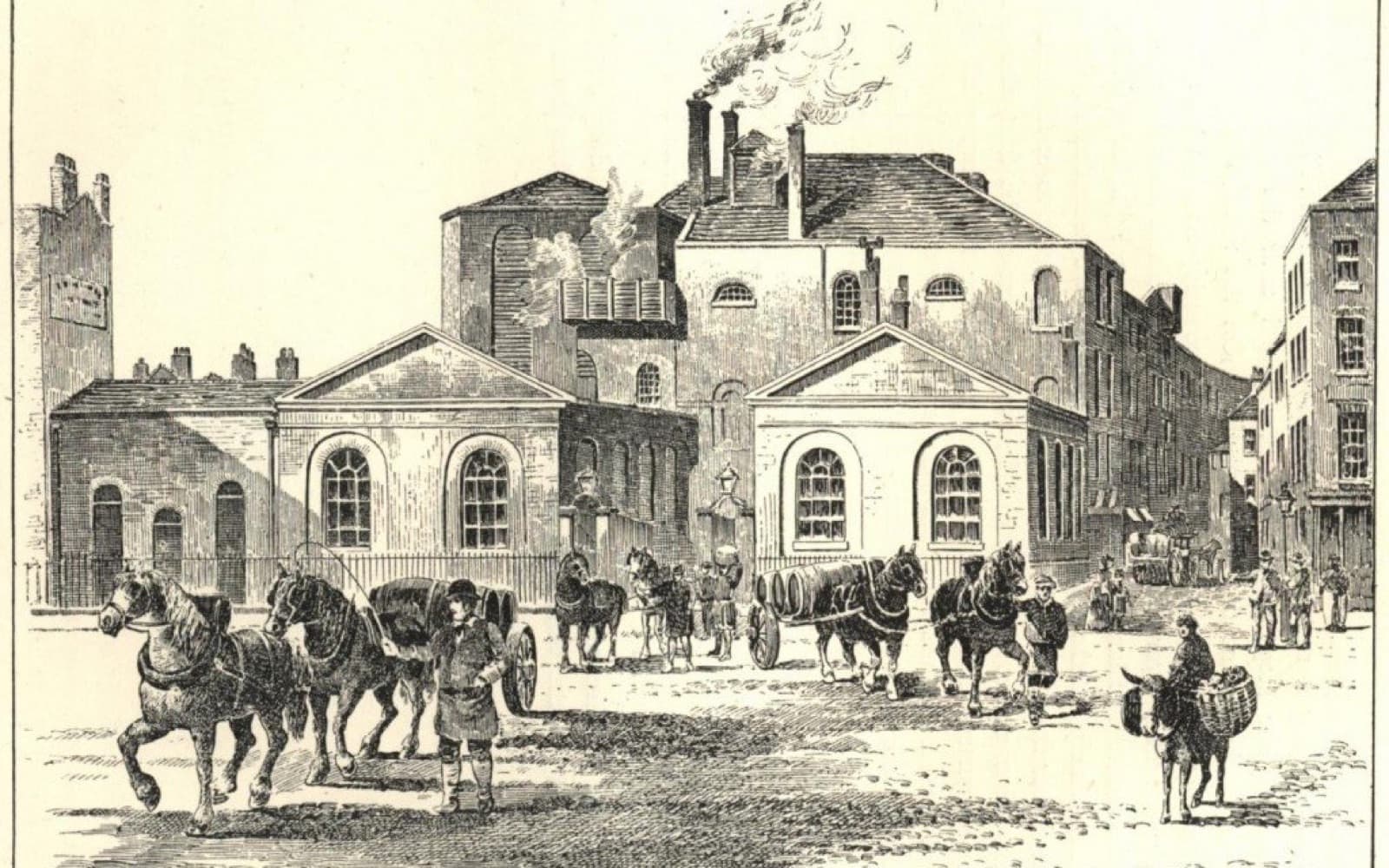
At about half past four on the afternoon of Monday 17 October 1814, an iron hoop fell off one of the giant vats at the Horse Shoe Brewery in London. George Crick, the brewery's storehouse clerk, was not worried. He later told the inquest he had often seen it happen before, without "any serious consequence". An hour later, the vat burst.
A vat the size of a house
The Horse Shoe Brewery belonged to Henry Meux and his partners and stood at the foot of Tottenham Court Road, where it meets Oxford Street. Like the other big London breweries of the time, it made porter, a dark beer that was left to mature for months in enormous wooden vats.
The vat that failed was 22 feet high and held 3,555 barrels of porter that had been maturing for ten months. That is more than a million pints. It was bound with 22 iron hoops, some of them weighing nearly a ton each. The one that slipped off was the lightest, at about seven hundredweight, or roughly 350 kilograms.
When the vat gave way at around half past five, the beer did not trickle out. It smashed open barrels nearby and knocked the tap out of another huge vat, which began emptying too. A brewery wall about 25 feet high and more than two bricks thick collapsed, along with part of the roof. Crick estimated that the brewery lost between 8,000 and 9,000 barrels in all.
Into the slums
Behind the brewery lay some of the poorest streets in London. St Giles was a notorious slum, known as a rookery, where families crammed into single rooms and many people lived in cellars. Many of the people living there, including most of those who died, were poor Irish immigrants.
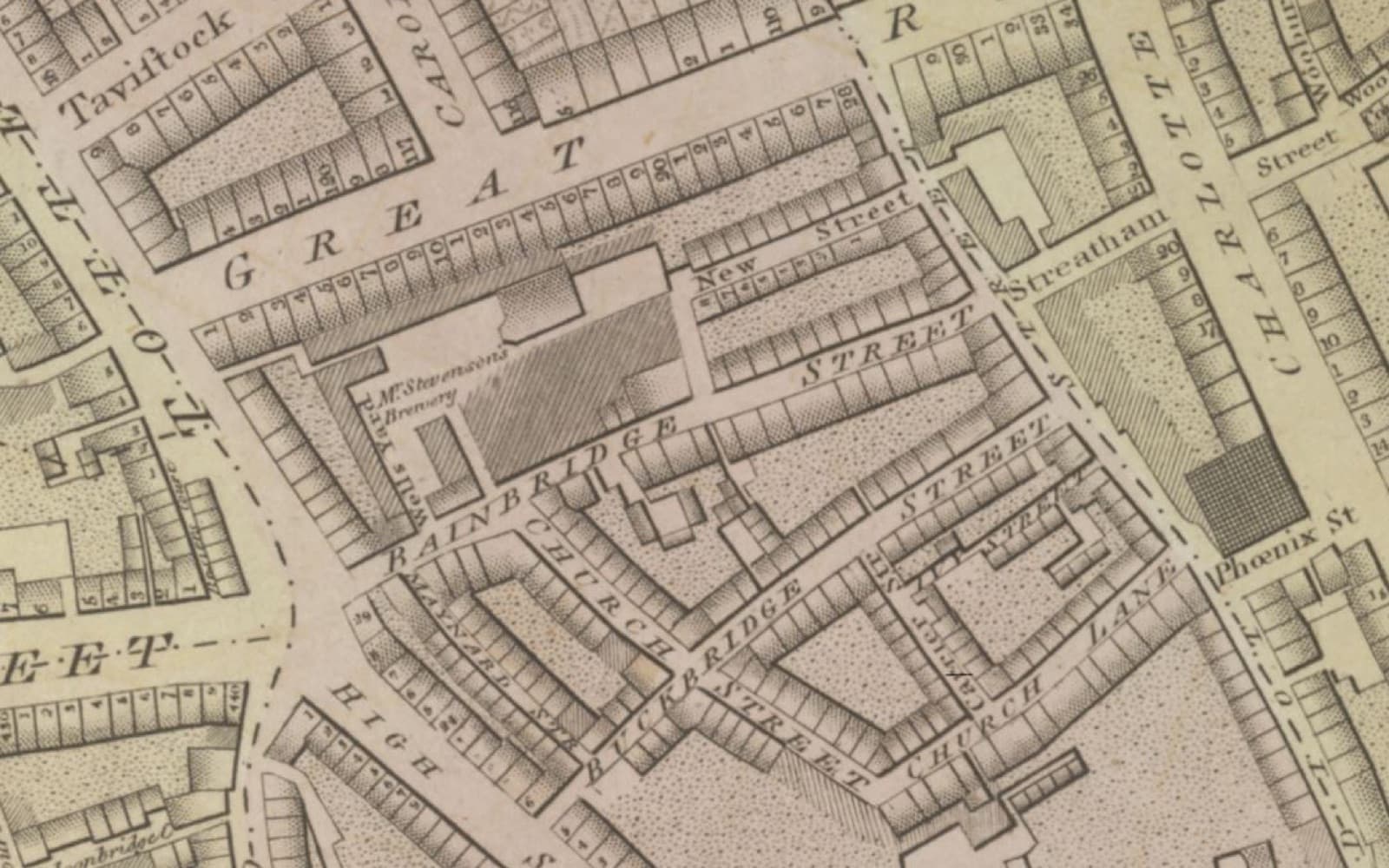
The wave of beer and rubble poured into New Street and George Street and into the backs of the houses on Great Russell Street. Walls caved in and houses filled up. The Gentleman's Magazine reported that people had to climb onto "their highest pieces of furniture" to keep from drowning.
The dead were all women and children. Eleanor Cooper, a 14-year-old servant at the Tavistock Arms pub, was washing pots in the pub's yard when the flood hit. She was dug out dead hours later, still standing beside a water butt. In a house nearby, a mother and her four-year-old daughter, Hannah Banfield, were having tea. The magazine reported that the mother "was washed out of the window, and the daughter was swept away by the current through a partition". The mother survived. Hannah did not.
In the kitchen of a house in New Street, Catherine Butler, a 65-year-old widow, died together with Mary Mulvey, 30, and Mary's three-year-old son, Thomas Murry. Mary's daughter, aged about seven, survived because she had just gone outside to play. The Morning Post reported that a wake for a two-year-old boy was being held in a New Street cellar, and that several of the dead had been at it. Ann Saville's body was found floating among the casks inside the brewery. Elizabeth Smith, a bricklayer's wife aged 27, and three-year-old Sarah Bates were also killed.
Digging for survivors
Rescuers dug through the wreckage into the night and through the next day. Contemporary reports praised "the caution and humanity" of the men clearing the rubble. At first it was feared that more than 20 people had died, but the final count was eight. Five people were taken to the Middlesex Hospital, among them Crick's brother John, who also worked at the brewery.
Nobody to blame
On Wednesday 19 October a coroner's jury met at the St Giles workhouse. It heard Crick's evidence about the hoop, the vats and the wall, and then, according to the New Annual Register, returned its verdict "without hesitation": the victims had "died by casualty, accidental, and by misfortune". No one was held responsible, and no compensation was ordered.
The brewery's loss was first put at around £15,000, and the firm later claimed £23,000. But Meux and Co had already paid excise duty on the beer, and in 1815 Parliament passed an Act letting the partners brew the same amount of beer duty-free. That was worth about £7,250 to them. The families of the dead relied on charity, including a collection of just over £33 at a nearby pub, the Ship, where five of the bodies were laid out.
The myths that grew
Over the following two centuries, the Beer Flood picked up some colourful extras. You may read that crowds rushed into the streets to drink the beer from the gutters, that a ninth victim later died of alcohol poisoning, or that hospital patients rioted when they smelled the beer. The beer historian Martyn Cornell, who went back to the newspapers of 1814, found no London report of people drinking the beer. One provincial paper claimed that locals filled every vessel "from a kettle to a cask", but the London reports describe gentlemen keeping the crowd quiet so that rescuers could listen for people trapped under the rubble. The other stories have no support in the 1814 reports.
What stands there now
The Horse Shoe Brewery kept brewing for more than a century. Brewing moved to Nine Elms in 1921 and the old site was demolished the following year. The Dominion Theatre, which opened in 1929, now stands on the site.
There is no memorial at the site to Eleanor, Hannah, Sarah, Thomas, Mary, Catherine, Ann and Elizabeth. Thousands of people pass the corner of Tottenham Court Road every day without knowing that it was once flooded with beer.
Odd, and entirely British.
More History →