Why Britain writes "colour" and America writes "color"
One stubborn American dictionary-maker set out to give the United States its own spelling. Some of his changes stuck, some were laughed out of existence, and Britain kept its u.
If Noah Webster had got everything he wanted, Americans today would write "tung" for tongue, "fether" for feather and "groop" for group. Most of those ideas went nowhere. But a handful of his spellings took hold, and they are the reason a British "colour" is an American "color".
A new country needs new spelling
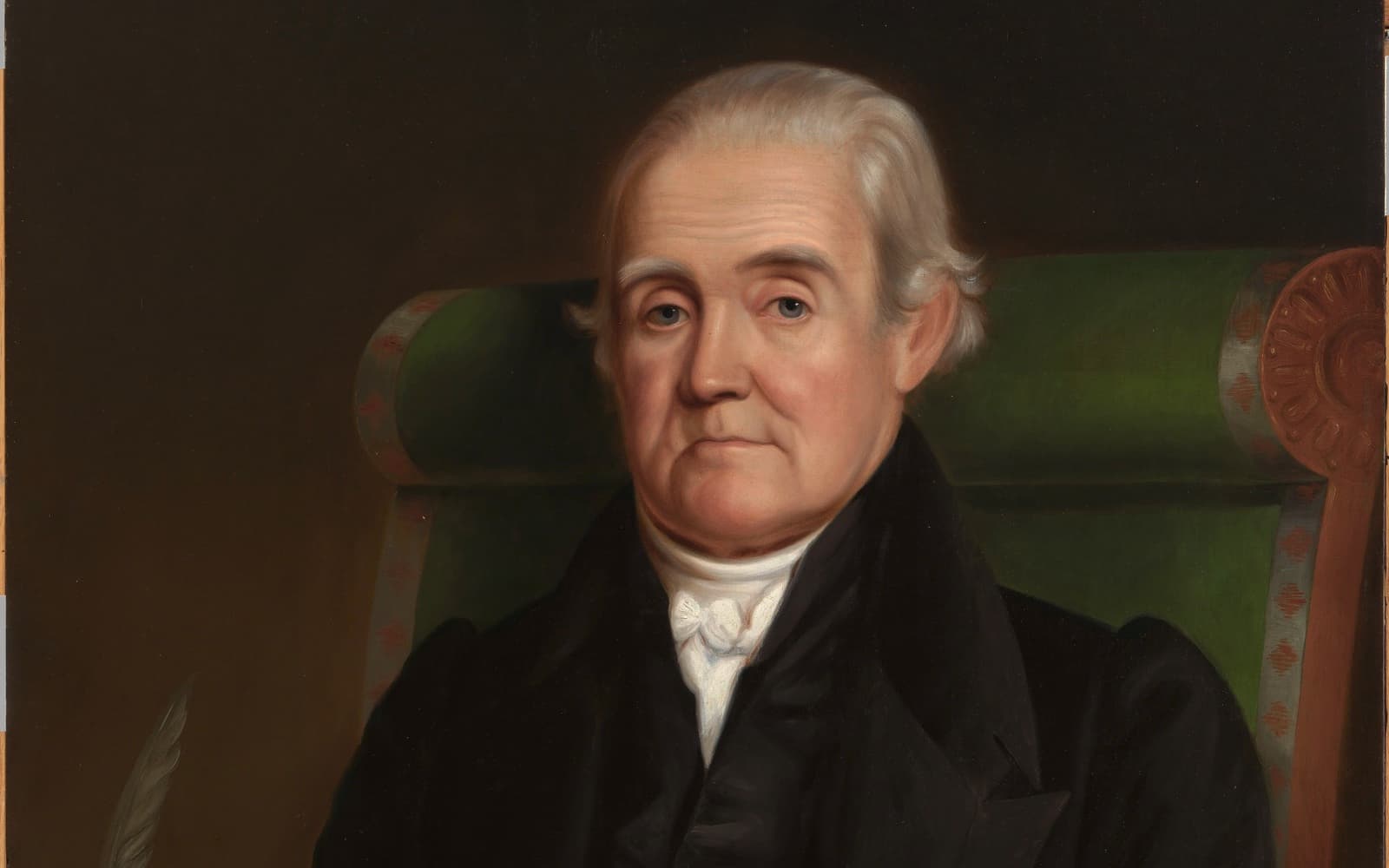
Webster was born in Connecticut in 1758 and grew up as the American colonies broke away from Britain. He trained as a lawyer but worked as a schoolteacher, and in 1783 he published a spelling book for American children. Thanks to its cover, it became known as the "Blue-Backed Speller". It was used in American schools for more than a century, and it is estimated to have sold close to 100 million copies.
For Webster, spelling was politics. In 1789 he wrote: "As an independent nation, our honor requires us to have a system of our own, in language as well as government." Britain, he added, "should no longer be our standard".
He was refreshingly open about his political aim. Writing about the spelling reform he proposed that year, he said a "capital advantage" of it "would be, that it would make a difference between the English orthography and the American". He believed a national language was "a band of national union".
The radical phase
In 1789 Webster was at his most extreme. Won over by Benjamin Franklin, who had dreamed up a new phonetic alphabet, he suggested spelling words the way they sound: "bred" for bread, "giv" for give, "frend" for friend, "laf" for laugh, "dawter" for daughter, "tuf" for tough and "blud" for blood. "Machine" would become "masheen".
None of these made it into his dictionaries. By the time he published his first one, A Compendious Dictionary of the English Language, in 1806, he had calmed down considerably. It gave the spellings that America still uses: color, favor, honor, center, theater, defense, plow and public. It also kept a few stranger ideas. Tongue and thumb were listed as "more correctly" tung and thum, and feather and group appeared alongside "fether" and "groop".
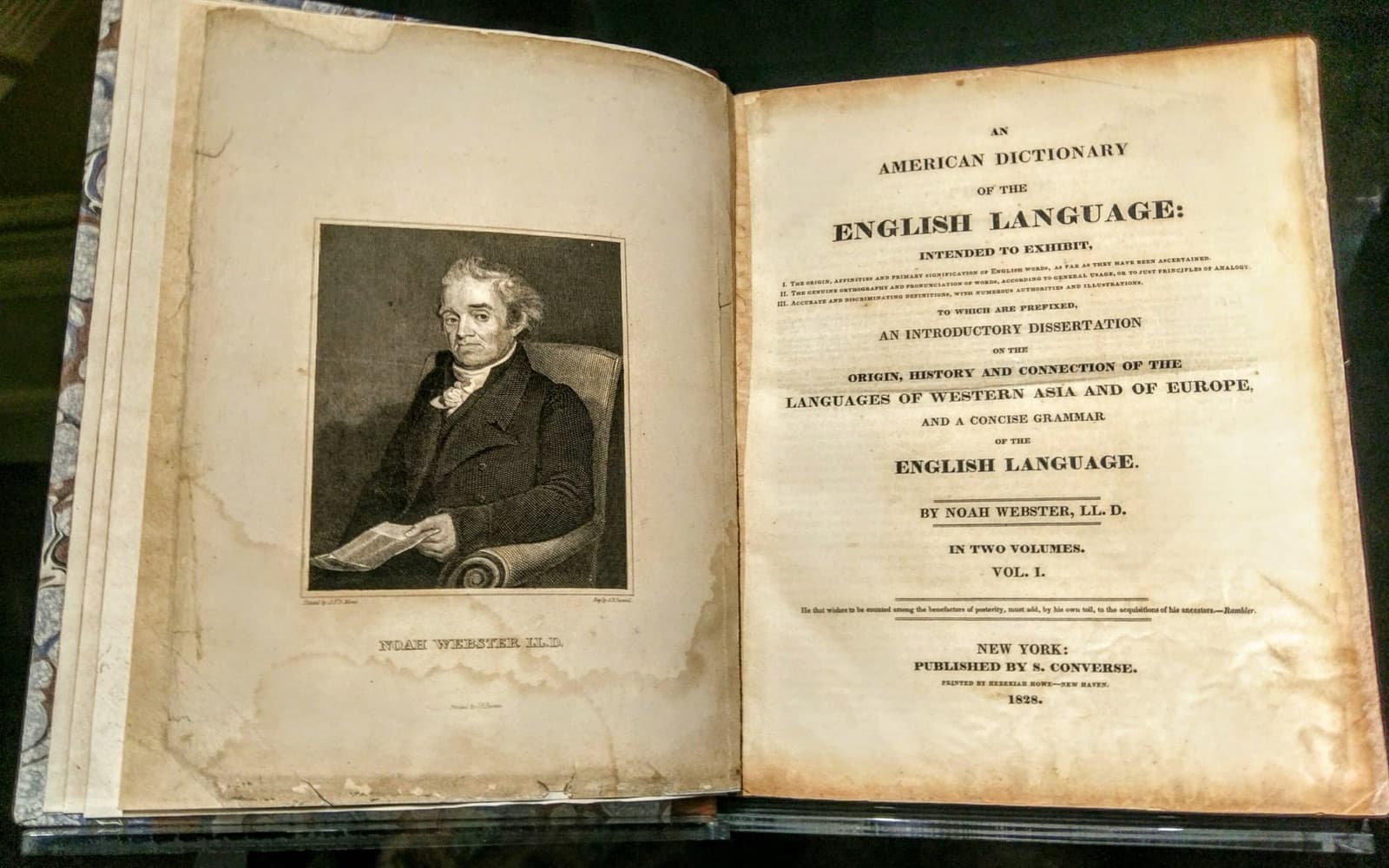
In 1828 he published his masterpiece, An American Dictionary of the English Language, with about 70,000 entries. It added another change that stuck: one L instead of two in words like "traveler" and "canceled".
He didn't invent "color"
Here is the twist. Webster did not make up "color" or "honor". The word colour came into English from Anglo-Norman French in the Middle Ages, and "colour" was the usual English spelling for centuries. But writers had long used Latin-style spellings too, and English books printed both.
Even Samuel Johnson's famous Dictionary of 1755, the great authority of British spelling, was far from consistent. Johnson wrote "colour" and "honour", but also "errour" and "emperour", while "author" and "ancestor" had no u at all. Some British writers and dictionary-makers had already dropped the u. Webster said so himself, and named the English authors he was following.
He was also scathing about Johnson. "Nothing in language is more mischievous than the mistakes of a great man," he wrote in 1828. "It is not easy to understand why a man, whose professed object was to reduce the language to some regularity, should write author without u and errour and honour with it!"
So Webster did not create American spelling out of nothing. He chose from spellings that already existed and put his name behind them.
How his spellings spread
Webster's big dictionary was not an instant hit. It cost $20, a huge sum at the time, and sold slowly. The real success came after his death in 1843, when the brothers George and Charles Merriam bought the rights to revise it. Their cheaper edition of 1847 cost $6, and American schools bought it in bulk. In 1850 Massachusetts ordered a copy for every school in the state.
Through his speller and those dictionaries, Webster's choices became the American standard. The Merriams' company still exists today as Merriam-Webster.
Britain didn't follow, at least not all the way
It is often said that Britain simply refused to follow Webster. The truth is a little more interesting. Britain dropped the k from "musick" and "publick" too, and the u from "errour" and "emperour". On those, British and American spelling ended up the same.
But the most visible changes, color, center, defense and traveler, became known as "American spelling", and in Victorian Britain that was not a compliment. In 1892 the American critic Brander Matthews mocked the London papers' horror of "American spelling". Even the St James's Gazette, which insisted that it did not hurt sales, called it "the ugliest forms of American spelling". To many Britons, keeping the u became a way of not being American.
Myths worth binning
A popular story says Americans dropped the u to save ink, paper or money, for example because newspapers charged advertisers by the letter. Fact-checkers have rejected it. Webster did mention that his most radical scheme would make books slightly cheaper to print, but that was a side argument. One of his chief reasons, by his own account, was to make America different.
Another myth says "-ize" endings, as in "realize", are American. They are not. Johnson used them in 1755, and Oxford University Press still prefers them today. When H. W. Fowler wrote about it in 1926, most British printers already used "-ise", but he noted that the Oxford English Dictionary, the Encyclopaedia Britannica and The Times all used "-ize". Since then, "-ise" has become the usual British form.
Noah Webster wanted to set America apart. He managed it, one missing u at a time.
Odd, and entirely British.
More Words & Language →