Why Britain drives on the left, and why most of the reasons you've heard are guesswork
Knights, swords and Napoleon star in the usual explanation for Britain's left-hand driving. The real paper trail is duller but odder: a jammed London Bridge, a Roman quarry track and an 1835 law still in force in England and Wales.
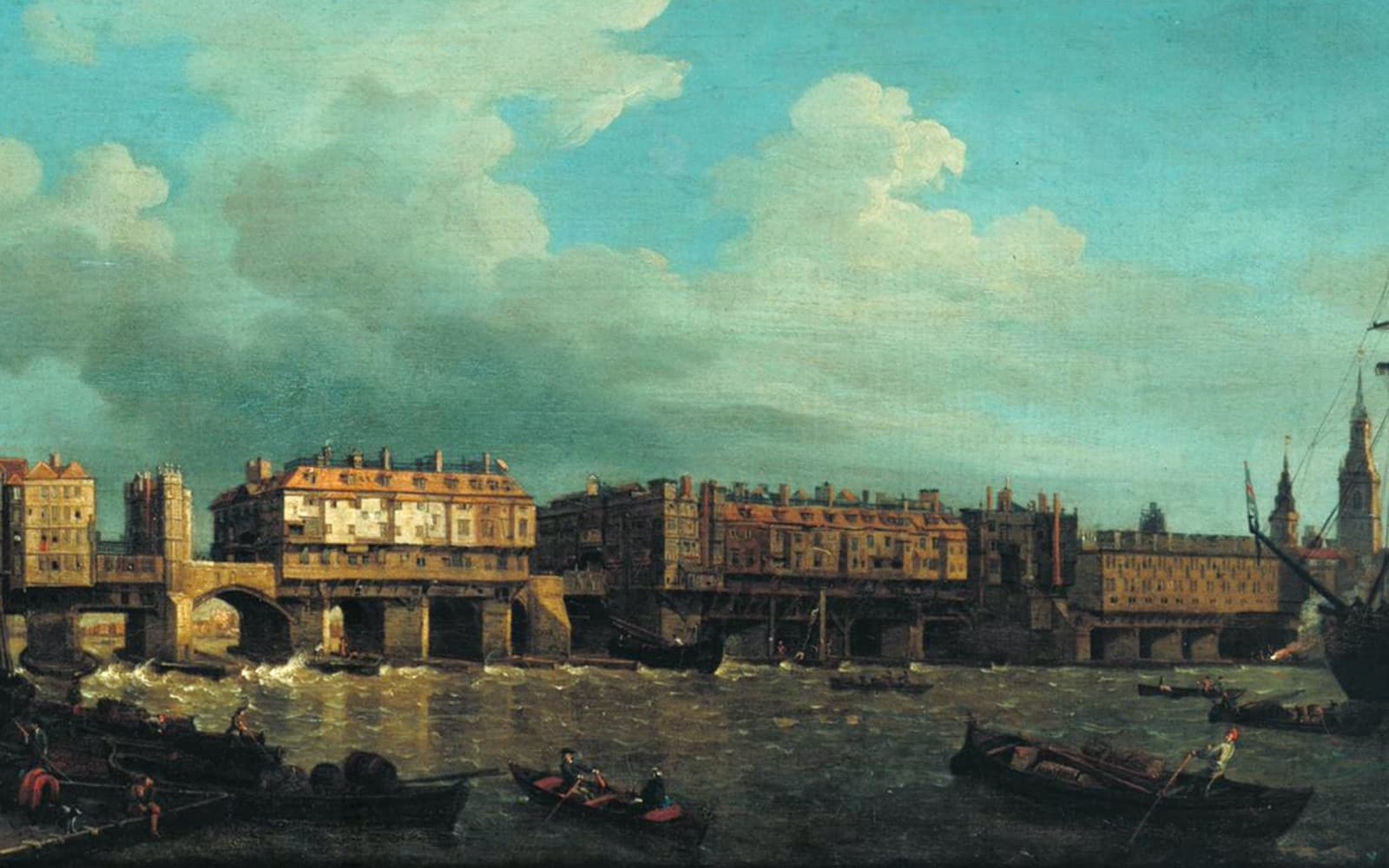
In 1722, London Bridge was jammed. It was the only bridge across the Thames in London, lined on both sides with houses and shops, and carts and coaches squeezed along the narrow road between them. So the City's Court of Lord Mayor, Aldermen and Common Council, repeating several former orders, ordered that three men be appointed to stand at each end of the bridge and keep the traffic moving.
Their instructions were simple. Carts and coaches leaving the City were to keep to the east side of the bridge. Those coming in from Southwark were to keep to the west. Either way, that meant keeping to the left.
It is one of the earliest written traces of a habit Britain now takes for granted. But ask why we drive on the left and you will usually hear a story with knights in it.
The sword-arm theory
The best-known explanation goes like this. Most people are right-handed. If you rode along a road keeping to the left, any stranger coming the other way passed on your right, where your sword hand was ready. Knights, it is said, passed each other this way, just as jousters passed left side to left side in the lists.
Another version says a right-handed rider, sword on the left hip, mounts from the left, which is safer from the roadside than in traffic.
Both stories are neat, and might even be true. But nobody has found any document that says travellers kept left to free their sword arm. It is a reasonable guess, repeated until it sounds like history.
A Roman clue near Swindon
The most interesting evidence for an old habit of keeping left comes from the ground. In the late 1990s Bryn Walters of the Association for Roman Archaeology studied a Roman track leading to a quarry at Blunsdon Ridge, near Swindon. The track had carried stone to a nearby temple and then fell out of use, so it was unusually well preserved.
Carts went in empty and came out heavy with stone, and the ruts on one side were much deeper than on the other. Walters concluded that the Romans drove on the left.
Not everyone was convinced. "We do not know which side of the road the Romans drove on. There just isn't enough evidence either way," said a British Museum expert on Roman archaeology, quoted by the journalist Gwynne Dyer. At best, the ruts show what carters did on one Roman track, a long way from proof that Britain has kept left ever since.
The law catches up
In 1756 Parliament passed an Act to widen the bridge and clear away its houses. It also wrote the same rule into law: "all Carriages passing over the said Bridge from London shall go on the East Side thereof as near as may be, and that all Carriages passing over the said Bridge to London shall go on the West Side thereof as near as may be". Anyone who broke the rule could be fined.
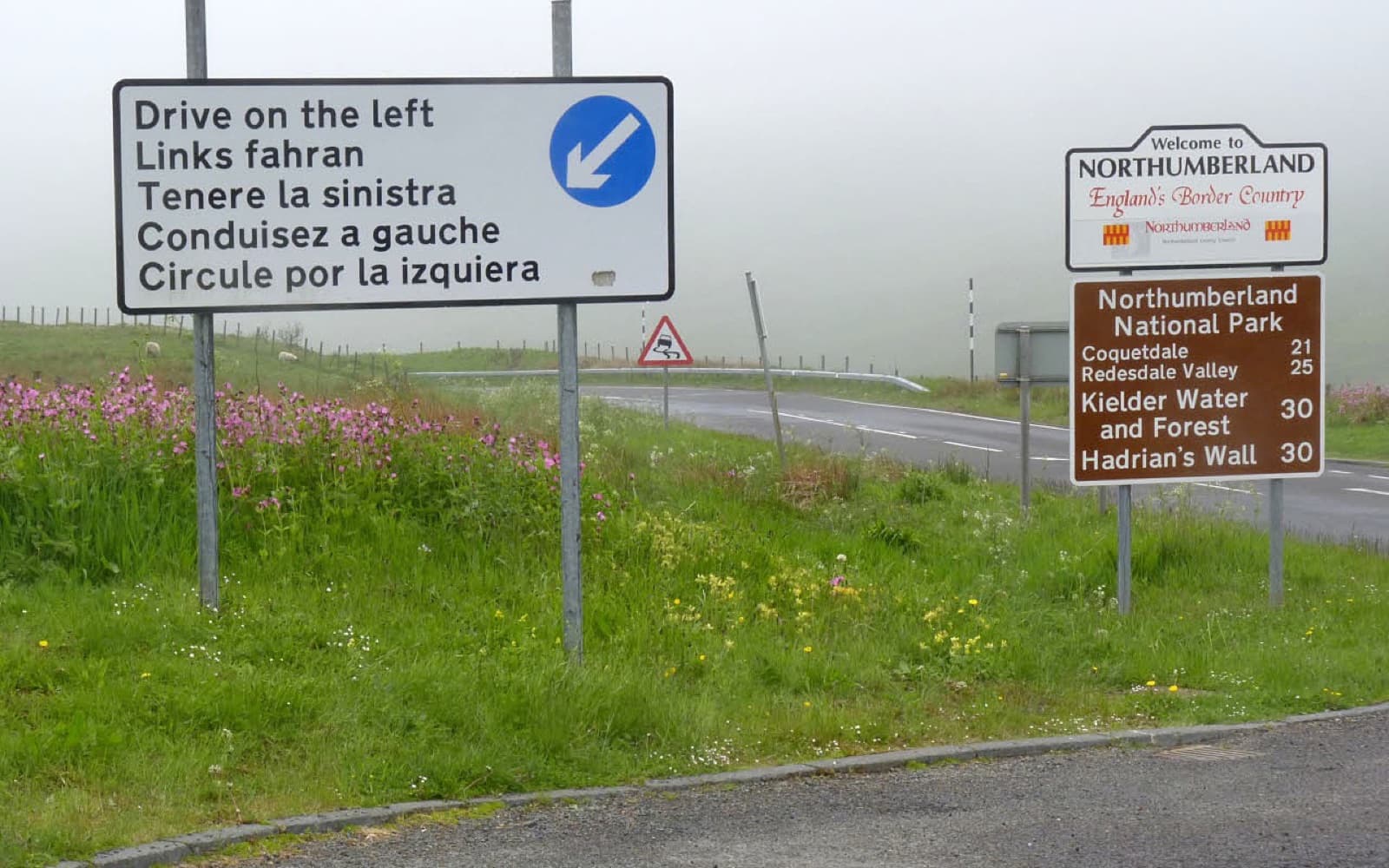
That was one bridge. For the rest of England and Wales, the key law came in 1835. Section 78 of the Highway Act punished any driver of a "waggon, cart or carriage", or of horses, mules or other beasts, who met other traffic and did not keep "on the left or near side of the road".
The phrase "near side" is a horseman's term. The near side of a horse is its left, the side people mount from and lead it on. British drivers still call the left of a car the nearside.
Remarkably, section 78 has never been repealed. It has been trimmed and the fines updated, but the words about keeping to the left or near side are still on the statute book today.
Did Napoleon really make Europe switch?
The other half of the popular story is about why most of Europe drives on the right. Supposedly, revolutionary France switched sides to break with the old order, Napoleon's armies carried the rule across the continent, and Britain, never conquered, stayed on the left.
It is a good story, and the map seems to fit it. A writer in Motor Sport magazine noticed in 1947 that, according to a 1934 European touring guide, Austria had two rules of the road: drivers kept right in Tyrol and Vorarlberg and left in the rest of the country. Tyrol and Vorarlberg, the writer pointed out, were provinces Austria had lost during the Napoleonic wars. In fact Austria switched region by region between 1921 and 1938.
But Ian Watson, in a 1999 sociology paper at Rutgers University, found that "there is in fact no evidence that the French Revolution prompted a change in the rule of the road in France or anywhere else". Historians who have looked, notably Peter Kincaid, have found no such decree.
Britain was not always the odd one out
A century ago, keeping left was no British quirk. Watson calculated that in 1919 just as many territories around the world kept left as kept right, and more people lived in the keep-left ones.
Portugal, Argentina, Austria, Czechoslovakia and Hungary were among the places that moved from left to right in the 20th century. The most famous was Sweden. On Sunday 3 September 1967, a day the Swedes call Dagen H, the whole country swapped sides at once, even though voters had rejected the idea in a referendum 12 years earlier.
Very occasionally a country goes the other way. In September 2009 Samoa switched from the right to the left, partly so Samoans could bring in used right-hand-drive cars from Australia and New Zealand.
Today only four European countries keep left: the United Kingdom, Ireland, Malta and Cyprus. Further afield the list is long, mostly places with British links, such as India, Australia, South Africa and New Zealand, but also Japan, which never was a British colony. Together they hold roughly a third of the world's people.
So Britain drives on the left not because of knights or Napoleon, as far as anyone can prove, but because of an old habit that was written down on a crowded bridge, made law for England and Wales in 1835, and never changed.
Odd, and entirely British.
More Oddities →