The year Britain skipped 11 days
In September 1752, people across Britain went to bed on Wednesday the 2nd and woke up on Thursday the 14th. Eleven days simply never happened, and it was perfectly legal.
On the night of Wednesday 2 September 1752, people all over Britain and its colonies went to bed as usual. When they woke up, it was Thursday 14 September. Nobody had overslept. By an Act of Parliament, the eleven days in between had been removed from the calendar.
A calendar that ran slow
The problem went back to Julius Caesar. The Julian calendar, which Britain still used in 1752, assumed that a year is exactly 365 and a quarter days long, so it added a leap day every four years without exception. But the real year is a little shorter, by about 11 minutes. Over the centuries those minutes piled up, and the calendar slowly slipped out of step with the seasons.
The Act that fixed it explained the problem itself. At the Council of Nicaea in the year 325, it said, the spring equinox had fallen "on or about the twenty-first day of March". By the 1750s it arrived on "the ninth or tenth day of the same month".
The Catholic world had already fixed this. In 1582 Pope Gregory XIII introduced a new calendar that skipped ten days and changed the leap-year rule, so that most century years, like 1700 and 1800, would no longer be leap years. Catholic countries switched quickly. Protestant Britain, wary of anything that came from Rome, kept the old calendar for another 170 years. By 1752 it was 11 days behind most of Europe, so letters and business with the Continent often had to carry two dates.
The lord who learned it by heart
The man who pushed the change through Parliament was Philip Dormer Stanhope, the 4th Earl of Chesterfield. In February 1751 he introduced the bill in the House of Lords, and he was refreshingly honest about it in a letter to his son. He had been "obliged to talk some astronomical jargon", he wrote, "of which I did not understand one word, but got it by heart, and spoke it by rote from a master".
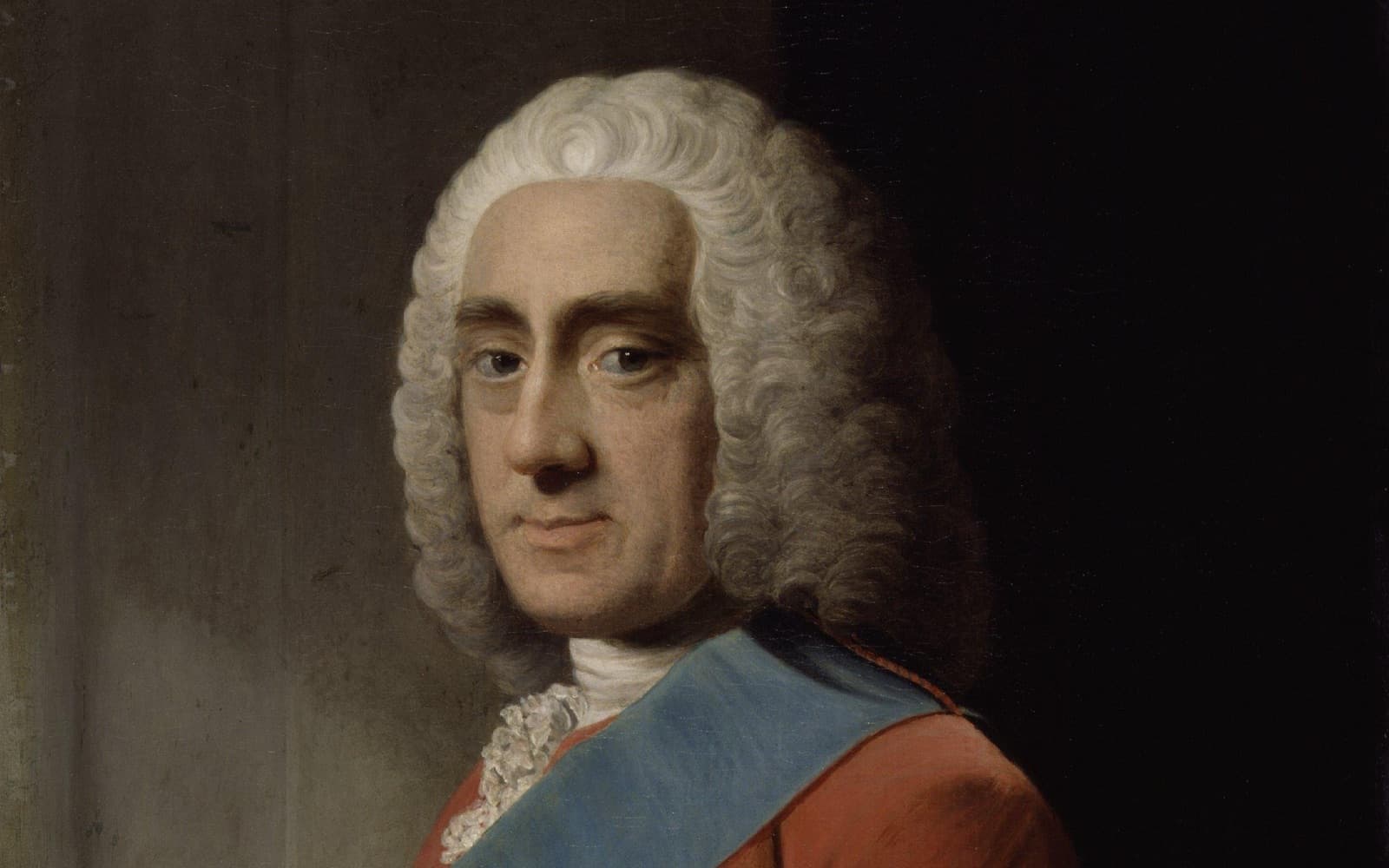
The real expert was his ally the Earl of Macclesfield, an astronomer who, in Chesterfield's words, "had the greatest share in forming the bill". Chesterfield complained that the new calendar had been adopted by all the Protestant powers "except Russia, Sweden, and England". It was not, he wrote, "very honorable for England to remain, in a gross and avowed error, especially in such company".
The bill became the law now known as the Calendar (New Style) Act 1750. Amended over the years, it is still in force today.
Two changes in one
The Act did more than delete eleven days. Until then, England's legal year had started not on 1 January but on 25 March, Lady Day. So a date in February 1751 was still officially part of 1750, which is why historians often write dates from that period as "1750/51".
The Act moved New Year's Day to 1 January. As a result, the year 1751 in England began on 25 March and ended on 31 December, less than ten months later. Scotland had already moved its New Year to 1 January back in 1600, but it still used the old calendar, so it lost the same eleven days.
The change explains a famous oddity. George Washington, born in colonial Virginia, was recorded in his family Bible as born on 11 February 1731/2. After the switch, his birthday became 22 February 1732, the date now usually given for it.
Nobody lost any money
The Act was carefully written so that nobody was cheated. Rents, debts and leases fell due on the same real days they would have done anyway, and interest was paid only for the days that actually passed. Fairs and markets were moved eleven days later so that they stayed in the same part of the season. That is why some old country fairs still take place on dates like "Old Michaelmas".
Some people kept celebrating Christmas on the old date too. Old Christmas Day fell on 5 January, and moved to 6 January after 1800, when the old and new calendars drifted another day apart.
The riots that never happened
You may have read that angry mobs took to the streets in 1752 chanting "Give us our eleven days", convinced that the government had stolen part of their lives. It makes a great story. It is almost certainly not true.
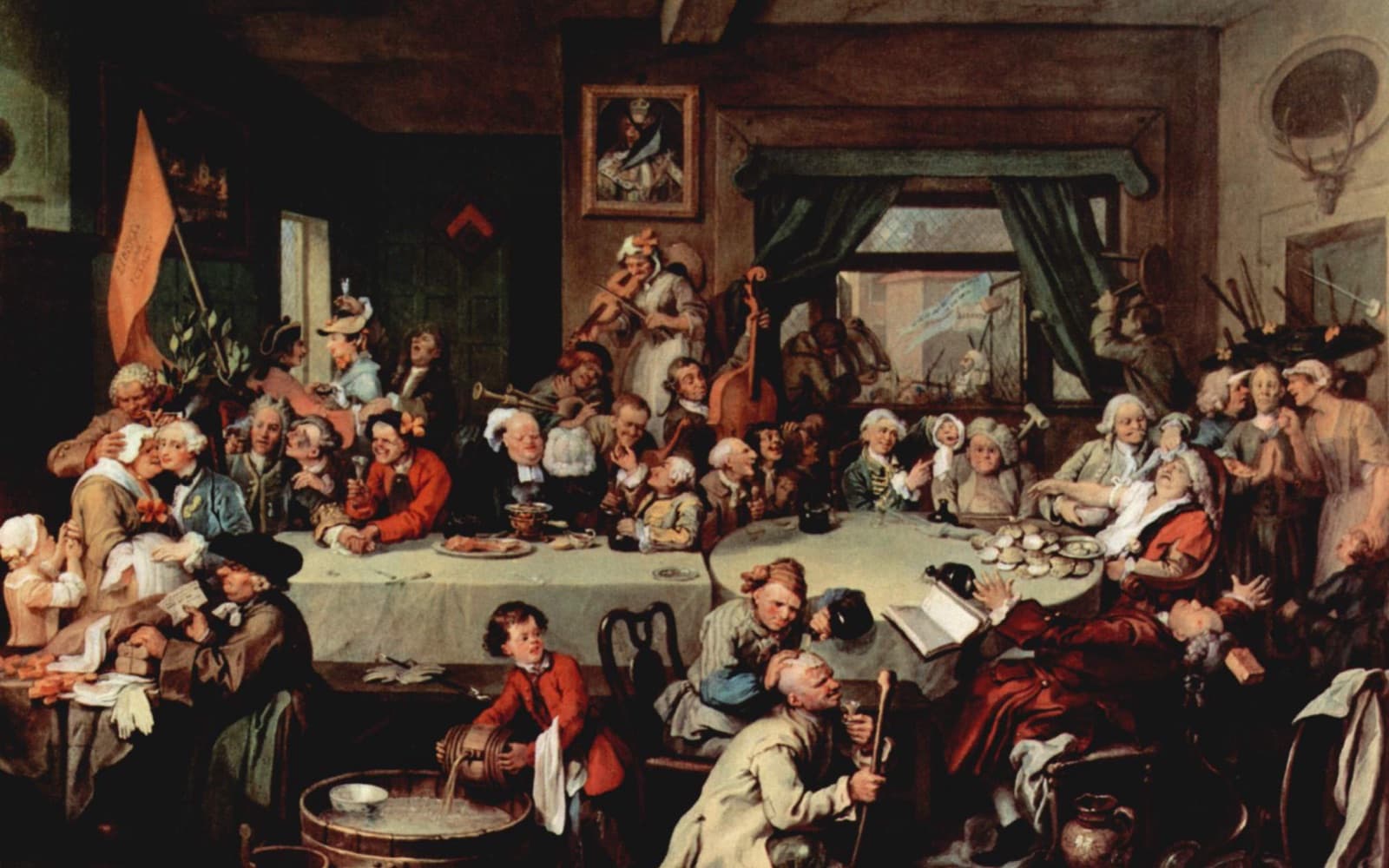
The historian Robert Poole went looking for evidence of calendar riots and found none in the records of the time. The slogan seems to have come mostly from a painting. In 1754 and 1755, William Hogarth painted a series of satirical pictures about a corrupt election in Oxfordshire, where the calendar change had been used to attack the candidates who supported it. In the first picture, a Tory banner lies on the floor of a rowdy Whig dinner. It reads: "Give us our Eleven Days".
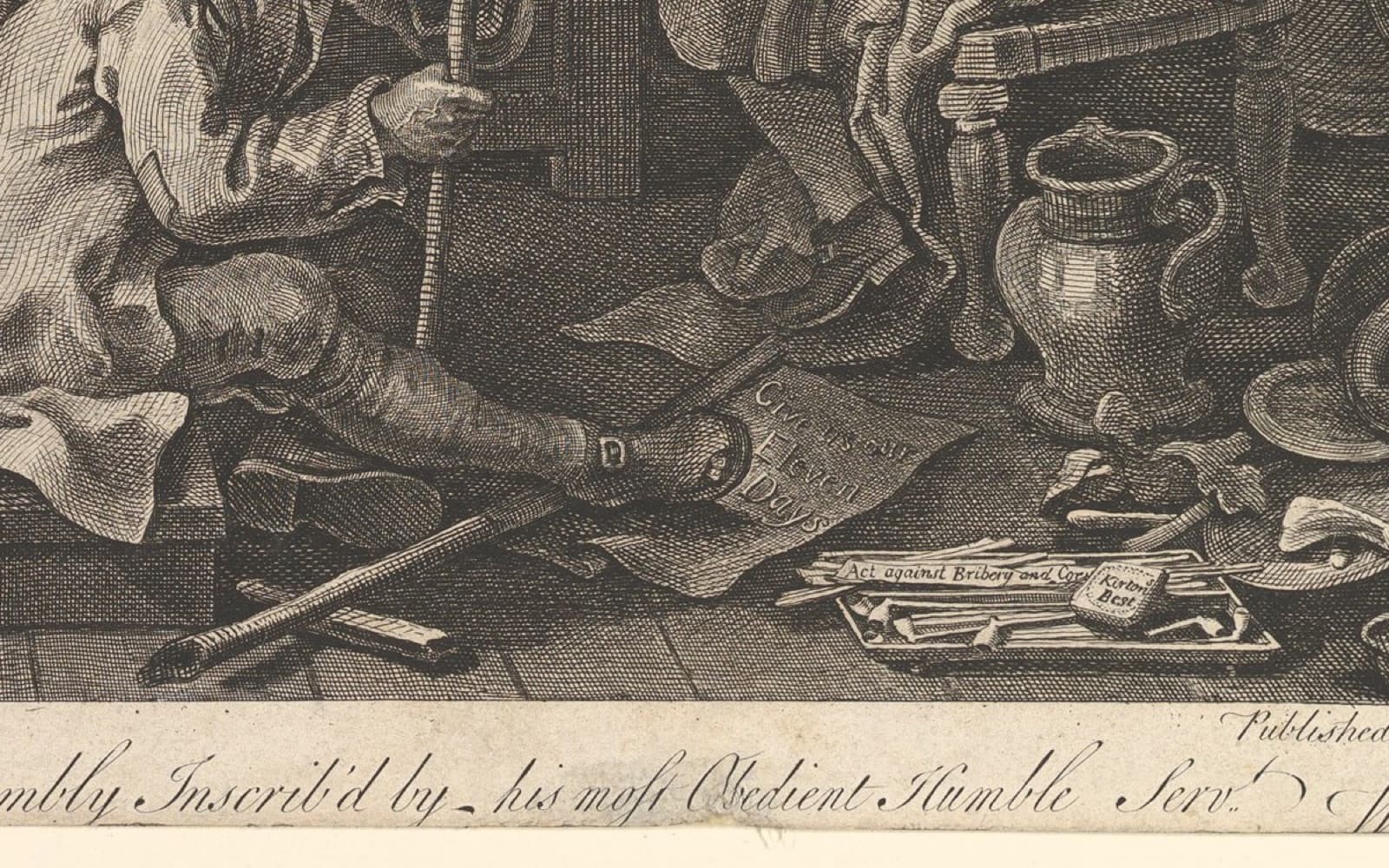
People certainly grumbled about the change, and it became a handy weapon in election politics. But as the historian Penelope Corfield puts it: "It was later myth which turned the grumbles of 1752 into riots."
Still with us
The lost days left a mark you can still find in your diary. The UK tax year starts on 6 April, a leftover from the old Lady Day year of 25 March, pushed on by the lost days. After 1752 the Treasury's year began on 5 April, eleven days later. Why it is now the 6th is usually put down to 1800, which was a leap year under the old calendar but not under the new one, although historians have suggested other explanations too.
The Act also brought in the leap-year rule we use today. That is why 1900 was not a leap year, 2000 was, and 2100 will not be.
Odd, and entirely British.
More History →