The summer London smelt so bad that Parliament finally fixed the sewers
In the heatwave of 1858 the Thames reeked so badly that MPs fled their own committee rooms. Within weeks, the smell had achieved what years of cholera deaths had not.
In June 1858, an MP stood up in the House of Commons and asked the government what it planned to do about the River Thames. The other members laughed. Less than seven weeks later, they had passed one of the most important laws in London's history, and they had done it because they could no longer stand the smell.
A river full of sewage
London in the 1850s was the biggest city in the world, and most of its sewage ended up in the Thames. For centuries, homes had emptied into cesspits that were dug out by hand. But the population had exploded, and the new flushing toilets sent far more water into the system. From the late 1840s, London's new Metropolitan Commission of Sewers ordered cesspits to be closed and houses connected to the sewers. The sewers ran straight into the river.
It was meant to make the city healthier. Instead, it turned the Thames into an open drain running through the middle of London, rising and falling with the tide.
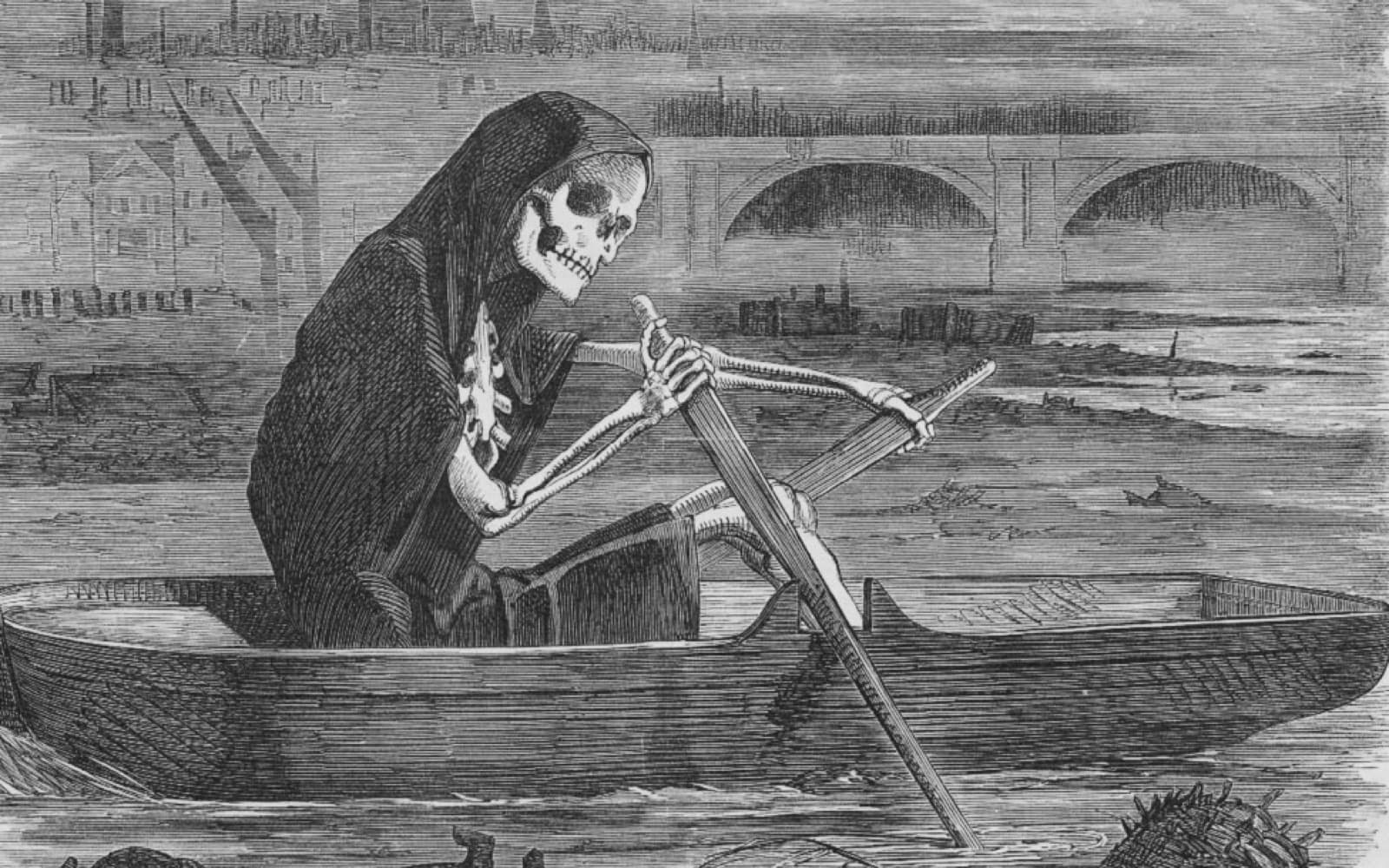
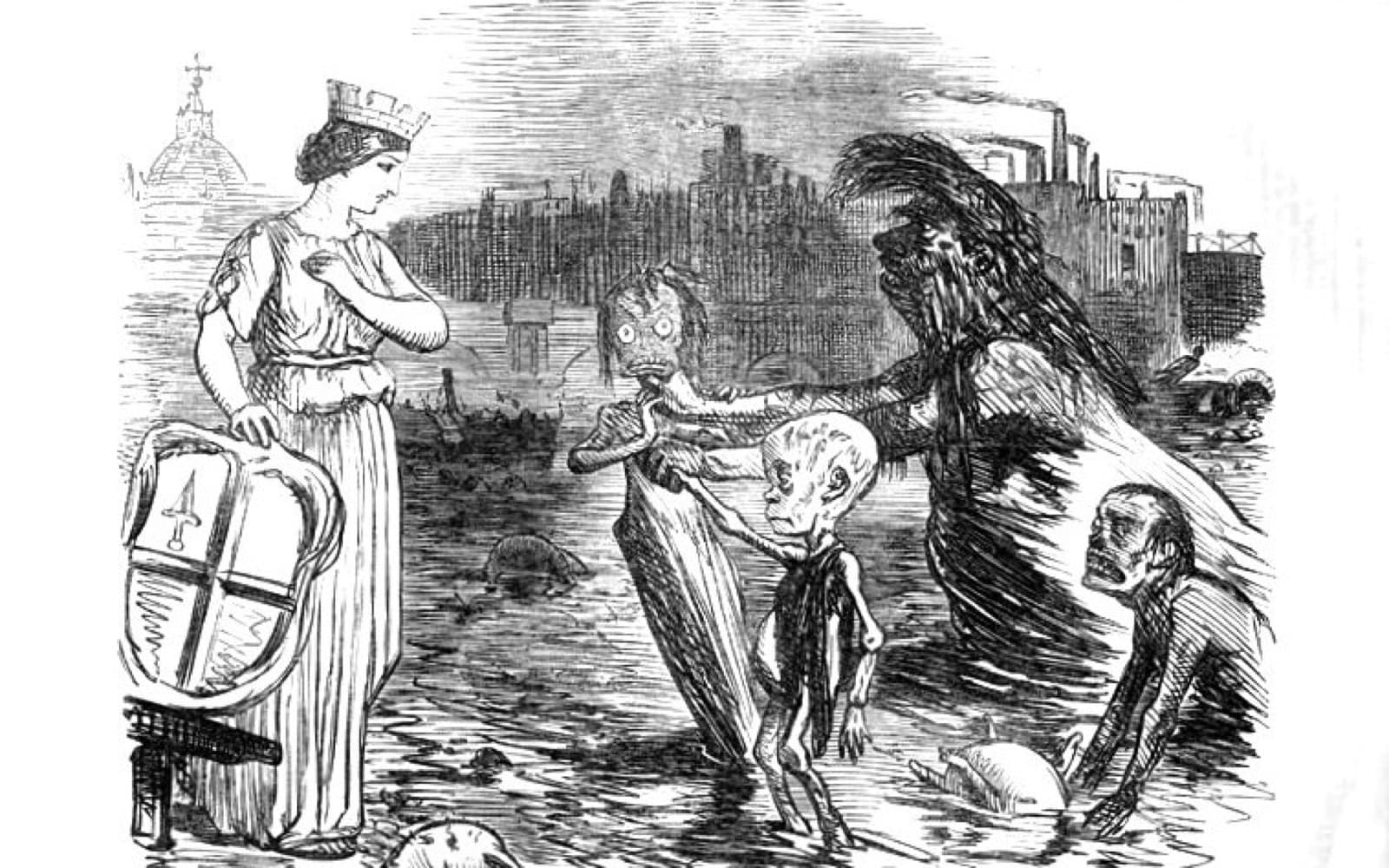
People had been warned. In July 1855 the scientist Michael Faraday took a boat trip on the river and dropped small pieces of white card into the water to see how far down he could still see them. They vanished almost at once. He wrote to The Times that "the whole of the river was an opaque pale brown fluid", and Punch drew him handing his card to a filthy Father Thames. Nothing much changed.
The hottest, smelliest summer
Then came the summer of 1858, one of the hottest anyone in London could remember. The river ran low, the sun baked the sewage on its banks, and the smell became almost unbearable. Newspapers began calling it "the Great Stink".
The worst place to be was right on the riverbank, which is exactly where the new Houses of Parliament stood, still being finished. On 15 June, the MP Ross Mangles asked whether the government would do anything about the river. "One of the noblest of rivers," he said, "has been changed into a cesspool." Hansard records laughter and cheers. Lord John Manners, the minister in charge of public works, replied that the government had "nothing whatever to do with the state of the Thames". It was a job for the new Metropolitan Board of Works.
The laughter was strange, because MPs were already suffering. Four days earlier, another member had told the House that MPs sitting in the committee rooms and the library "were utterly unable to remain there in consequence of the stench". The curtains on the river side were soaked in chloride of lime, a strong disinfectant, to keep the smell out. It did not work, and there was even talk of moving Parliament's business to Oxford or St Albans. Newspapers reported that Benjamin Disraeli, the Chancellor of the Exchequer, left a committee room with a mass of papers in one hand and his handkerchief pressed to his nose.
Fear in the air
The smell was not just unpleasant. It was terrifying. Most Victorians, including many doctors, believed that diseases such as cholera were spread by foul air, which they called miasma. London had already suffered several cholera epidemics, and the one of 1848 and 1849 had killed more than 14,000 people. If bad air carried disease, the Thames now looked like the most dangerous thing in the country.
They were wrong about how cholera spread. In 1854 the doctor John Snow had traced an outbreak in Soho to a single water pump, strong evidence that the disease travelled in contaminated water, not air. Few people believed him at the time. But in a twist of luck, the fix for the smell would turn out to help fix cholera too.
Eighteen days
On 15 July 1858, Disraeli stood up in the Commons and asked for permission to bring in a bill to clean the river. The Thames, he said, "has really become a Stygian pool, reeking with ineffable and intolerable horrors". He pointed out the irony that Parliament itself, "in pursuit of health", had sent London's sewage into the river in the first place.
The bill let the Metropolitan Board of Works borrow up to £3 million, guaranteed by the Treasury, and freed it to build a new drainage system without waiting for the government's approval. It flew through both Houses and became law on 2 August 1858, just 18 days after Disraeli first asked for it. Parliaments rarely move that fast. This one had its nose to the problem.
The sewer king
The man who did the work was the Board's chief engineer, Joseph Bazalgette. His plan was to stop sewage reaching the river in central London at all. Huge brick tunnels, called intercepting sewers, would run alongside the Thames and catch the waste from the old sewers, then carry it east, out of the city, to be released into the river far downstream.
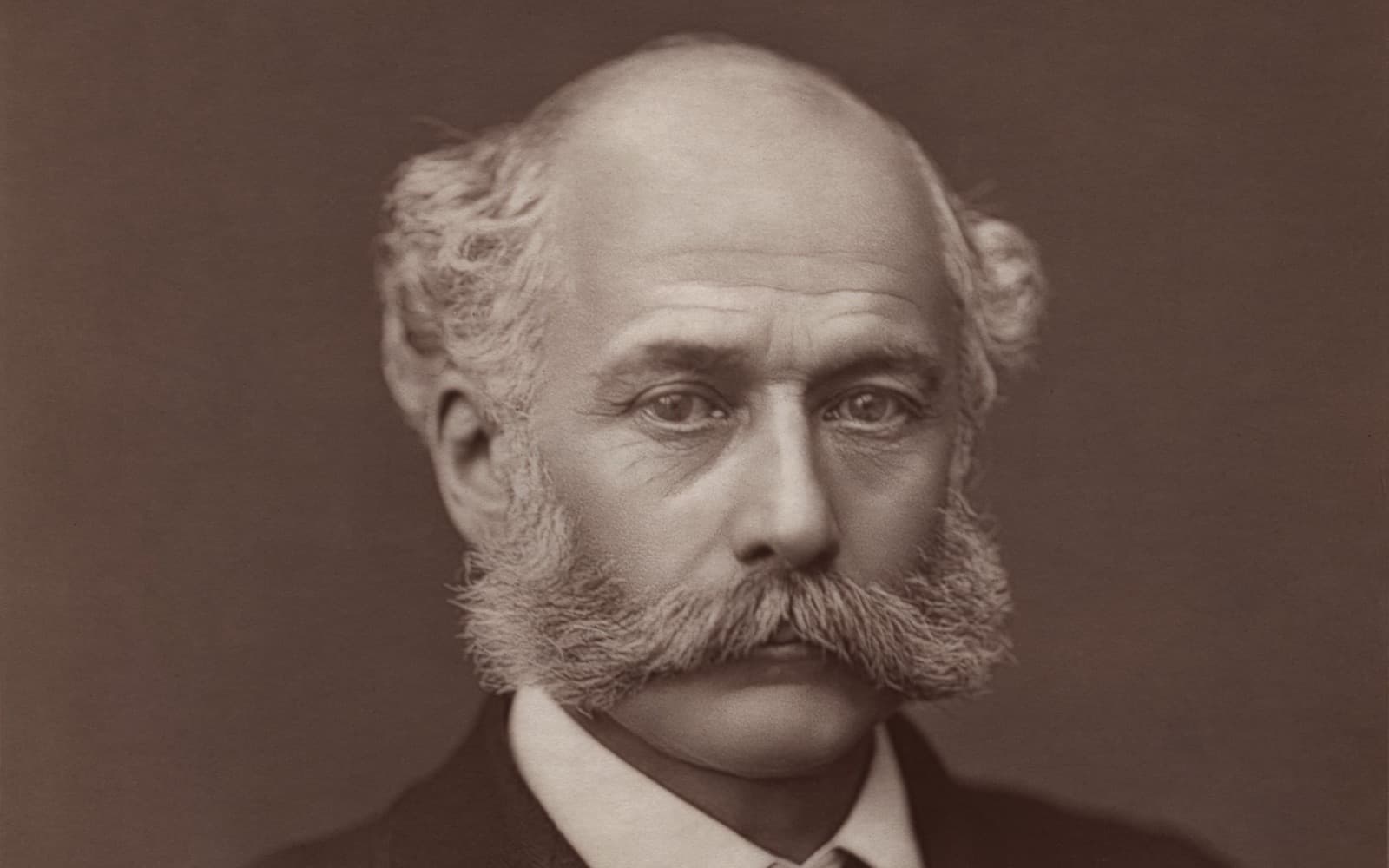
It became one of the largest building projects of the Victorian age: 82 miles of main intercepting sewers, more than 1,000 miles of new street sewers, and pumping stations to lift the waste where gravity alone could not move it. The Prince of Wales opened the great pumping station at Crossness in April 1865. Bazalgette also built the Victoria, Albert and Chelsea Embankments, pushing the riverbank outwards. Under the new road and gardens of the Victoria Embankment ran his main sewer, with room alongside it for a stretch of the Underground.
Bazalgette deliberately built his tunnels far larger than the city needed at the time, to allow for growth. It is one reason so much of his system still works.
The final outbreak
In 1866 cholera returned to London one last time. It struck the East End, around Aldgate and Bow, one of the few parts of the city not yet connected to the new sewers. Investigators traced it to the East London Water Company, which had been supplying contaminated water from its reservoir at Old Ford. More than 5,000 people died, and the outbreak finally convinced many doubters that cholera spread through water. The rest of London was largely spared, and the city never had another cholera epidemic like it.
The question that made MPs laugh had ended up saving thousands of lives. And London is still building on what Bazalgette started: in 2025 a new 25-kilometre "super sewer", the Thames Tideway Tunnel, was connected beneath the river to catch the overflows his Victorian system can no longer handle.
Odd, and entirely British.
More History →